Best Desert Camps in Tunisia: Where to Stay in the Sahara
Ksar Ghilane, Sabria and Douz, Zmela and Tembaine compared — access, dune scenery, camp comfort and how deep into the Sahara each one actually takes you.
Almost every “night in the Sahara” sold out of Djerba or the northern coast uses one of four places, and they are not interchangeable. Two put you at the edge of the dunes after a short drive; two put you genuinely inside them, hours further on, with almost nobody else around.
Check Availability
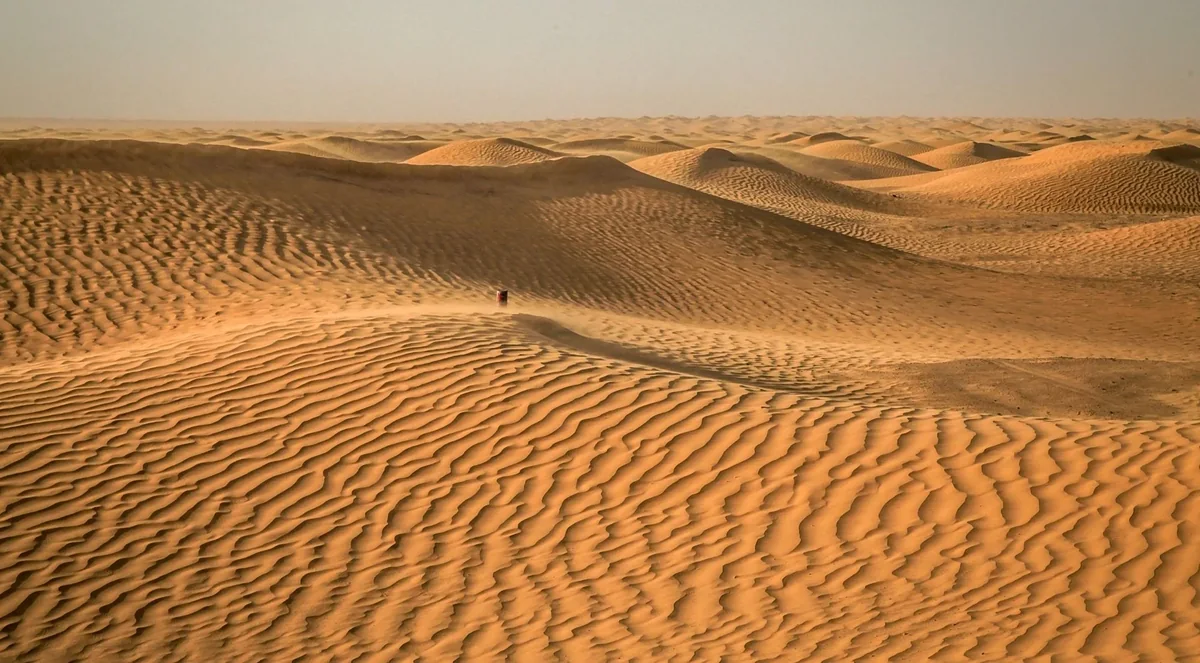
Ksar Ghilane: the easiest camp to reach, and the only one with a warm spring
Ksar Ghilane is 80km of asphalt south of Douz, with the last stretch a genuine 4x4 track — which is why the day trips here run in jeeps rather than coaches. The camps sit close enough to the spring-fed pool that guests walk over in the evening and again before breakfast, and the Roman fort of Tisavar, built on the desert frontier around 180–192 CE, is a short walk into the sand from most of them.
This is the camp to choose if you want the Sahara experience without the long transfer, or if you are coming from Djerba and Zarzis, where it is close enough for a genuine day trip. The sunset-and-sunrise desert tour with a tent night reaches Ksar Ghilane from Djerba and pitches at the dune edge for both, rated 4.8 from 585 reviews. Most operators run a fixed tented camp here — dining tent, bedding already made up, and at the better camps, flushing toilets and hot showers — rather than a carried-in bivouac, because there is no need to travel light this close to the road.
What to check: whether the hot spring is a walk or a short drive from the specific camp, whether toilets and showers are on site or shared, and whether the pool crowds with day-trip traffic in the late afternoon before your own group arrives.
Sabria and the Douz region: the straightforward first desert night
Douz calls itself the gateway to the Sahara, and the dunes genuinely start at the edge of town — no transfer required to be standing on sand. Sabria, a smaller village a short drive northwest, is used by several operators for the same reason: easy road access, camel strings based nearby, and camps close enough that a two-day tour from Djerba or a coach-based trip from the north can fit one comfortably.
This is the least demanding overnight in the Sahara and the one most first-time desert campers end up booking, because it asks the least of the itinerary around it. The overnight camp with dinner, sunset and sunrise by camel out of Douz is built specifically around this: a camel ride in at sunset, dinner and music at the fixed camp, and a second ride out at sunrise before the desert heats up.
What to check: whether the camp is walking distance from where the vehicle drops you or a further camel or quad transfer, how many other groups share the site that night, and whether the camel ride is timed for sunset and sunrise or run as a fixed midday slot regardless of light.
Zmela: real dune scenery without the deepest transfer
Zmela sits further into the Grand Erg Oriental than Douz or Sabria — past the last paved road, in dune country that looks like the postcard Sahara rather than the scrubby approach most day-trip camps use. It is not on every operator’s route, and it is worth asking specifically whether a “Douz desert camp” tour actually pitches here or stops short at the town’s own dune field.
The trade-off is a longer transfer by 4x4 or camel than Ksar Ghilane, Sabria or Douz — but nothing like the full-day push required to reach Tembaine. It suits travellers who have already done one easy desert night and want a second, more remote one without committing to the longest camps in the catalogue.
What to check: the exact pitch location relative to Douz — some tours market “Zmela” but camp closer to the paved road — the length of the 4x4 or camel transfer in, and whether the tour is a dedicated Zmela departure or an add-on to a Douz-based itinerary.
Tembaine: the deepest dunes most operators will take you to
Tembaine is the outlier on this list: a full day’s travel from Douz into the Grand Erg Oriental, close to the Algerian border, and the point past which almost no standard tour goes. The dunes here are larger and the horizon is genuinely empty in every direction — no distant camp lights, no other groups within sight, no paved road anywhere near the site.
Very few of the 116 tours on this site reach it, and the ones that mention it in their itinerary usually combine it with Ksar Ghilane, Tozeur, Matmata and Douz across several days rather than selling it as a standalone night, because the transfer alone eats most of a day each way. This is the choice for travellers who have done an easier desert night before and specifically want distance from the road, not comfort.
What to check: total transfer time each way before you book — it is often longer than the night itself — what infrastructure the camp actually has this far from anywhere (expect a genuine bivouac rather than showers and flush toilets), and whether the itinerary gives you a full night or only a few hours before pushing on.
Fixed camp or nomadic bivouac?
The camp names above mostly get you a fixed tented camp: a permanent site with Bedouin tents already pitched, mattresses and blankets laid out, a dining tent, dinner cooked on site, and at the better ones, flushing toilets and hot showers. A nomadic bivouac is the opposite — everything carried in on the vehicle or by camel and struck again in the morning, with no structures, no electricity and nothing on the horizon.
Ksar Ghilane, Sabria and Douz camps are almost always fixed. Zmela and Tembaine trips lean bivouac the deeper they go, simply because hauling a permanent camp’s worth of gear that far is not practical. If a warm shower after a long drive matters to you, stay closer to the road; if the point is genuine isolation, the bivouac further out is the better version of the experience, not a downgrade.
Self-drive or organised tour?
Ksar Ghilane and the Sabria/Douz camps are reachable on your own steam as far as the last few kilometres — the roads in are sealed or graded — but the final stretch onto the sand and the camp itself is not something to attempt without local knowledge of the track. Almost every operator handles that last leg as part of the booking rather than leaving guests to find the camp themselves.
Zmela and Tembaine are a different question entirely: both require a guided 4x4 or camel transfer with no realistic self-drive option, since there is no marked route and no phone signal once you are off the paved road. For any of the four, book the camp through an organised tour rather than trying to arrange transport and a pitch independently.
How long do you need?
One night works at any of the four — it is enough for sunset, full dark and sunrise, which are the reasons to camp in the first place. Ksar Ghilane and Sabria/Douz fit into a two-day tour from Djerba without strain. Zmela usually wants three days once the extra transfer is accounted for, and a genuine Tembaine night is realistically part of a four-day southern circuit rather than a standalone add-on.
Best time to go
October through April is the comfortable window across all four sites. Desert nights drop close to freezing between November and March regardless of how warm the afternoon was, so the extra blanket the camps provide is not optional at Ksar Ghilane and it matters even more at Zmela and Tembaine, where there is no building to retreat to. May, June and September are workable with a warmer sleeping layer; July and August are genuinely hard camping weather, with Tozeur-area afternoons regularly above 40°C.
What to pack
- Comfortable closed shoes for soft sand
- Lightweight trousers and breathable tops for the day
- A fleece or warm layer for the night — essential November to March
- Hat, sunglasses and sunscreen
- A scarf or shesh for wind and blown sand
- Swimwear and a towel if the camp is at Ksar Ghilane
- A torch or headtorch
- A power bank — few camps have charging beyond the dining tent, and none at Zmela or Tembaine
- Cash in dinars for tips, drinks and optional camel or quad rides
Frequently asked questions
Which desert camp is best for a first-time visitor?
Ksar Ghilane or a Sabria/Douz camp. Both are a manageable transfer from Djerba or the northern coast, give you a fixed tent with proper bedding, and — at Ksar Ghilane — a warm spring to swim in before dinner.
Is Zmela worth choosing over a standard Douz camp?
If your itinerary genuinely pitches there rather than at the town’s own dune field, yes — it is meaningfully more remote dune scenery for a moderate extra transfer. Confirm the actual camp location with the operator before booking, since “Douz desert camp” listings vary in how far out they go.
Do I need to go as far as Tembaine to see real dunes?
No. Ksar Ghilane and Douz both put you on genuine Sahara dunes for photographs and a camel ride. Tembaine is for travellers who specifically want several hours of empty horizon and have the extra day to spend reaching it.
Do desert camps have toilets and showers?
The fixed camps at Ksar Ghilane, Sabria and Douz usually do, though standards vary — ask the operator before booking rather than assuming. Bivouacs further out, including most Tembaine trips, do not.
Is one desert night enough?
For most first-time visitors, yes. One night gives you sunset, full darkness and sunrise, which are the main reasons to camp at all. A second night mainly suits travellers pushing on to a more remote site like Zmela or Tembaine.
What is the best season for desert camping in Tunisia?
October through April. Nights are close to freezing in the coldest months, which is manageable with the layers the camps provide, but July and August daytime heat makes the whole experience — not just the night — considerably harder.
Final planning advice
Match the camp to how remote you actually want to feel. Ksar Ghilane gives you the Sahara plus a warm spring and the shortest transfer; Sabria and Douz are the easiest first desert night; Zmela is a genuine step further into the dunes without a full extra day; Tembaine is for travellers who have already done one of the others and want real distance from the road. Our oases guide covers the other side of southern Tunisia — Tozeur, Chebika, Tamerza and Midès — if palm groves and canyon walks matter as much to your trip as a night under canvas.
Ready to book a desert camp? Compare Ksar Ghilane tours and Douz desert tours with live prices, or browse every overnight camping tour on the site.
See the Sahara From Your Hotel Door
Hotel pickup, a 4x4 across the Dahar plateau, the hot spring at Ksar Ghilane, and lunch — rated 4.8/5 by 1,671 guests. Free cancellation up to 24 hours before.
Check Availability & Book