Ksar Ghilane Oasis Guide
The thermal spring, camel vs quad, the Tisavar Roman fort, day trip vs overnight, and how Ksar Ghilane compares to Douz — everything to plan a visit to Tunisia's southernmost oasis.
A warm spring in a ring of palms, dunes on three sides, and a Roman fort slowly filling with sand. Ksar Ghilane is the single stop most reviewers on this site mention by name, and it’s worth knowing what you’re actually booking before you go.
Check Availability
Why Ksar Ghilane works for first-time Sahara visitors
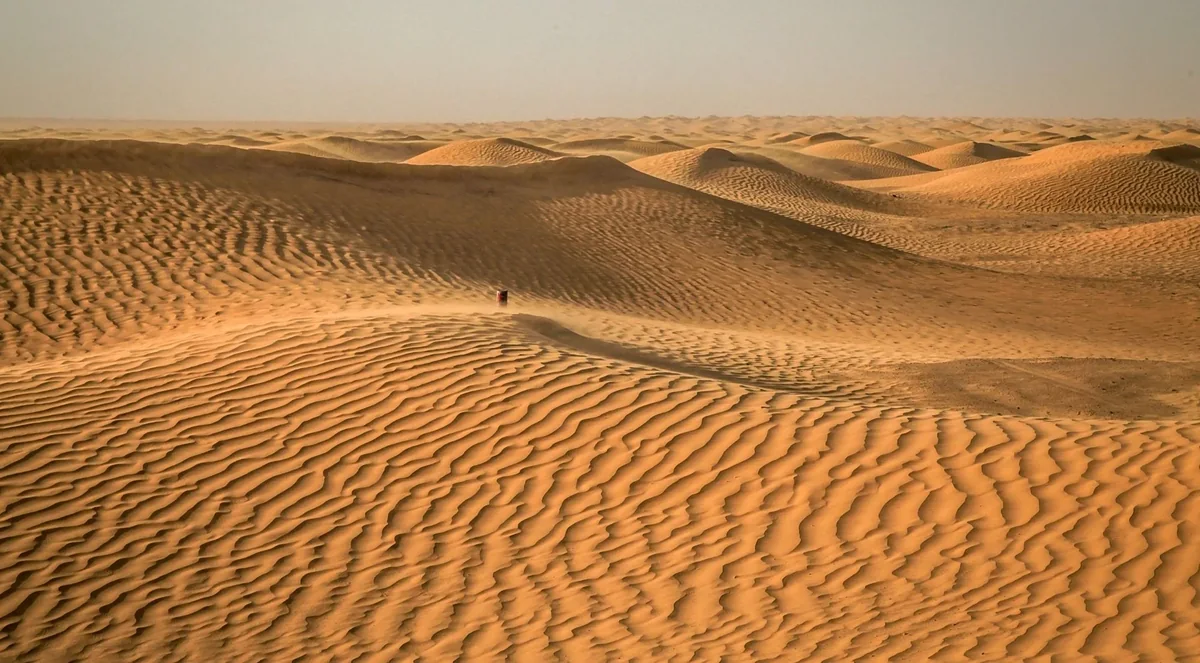
Ksar Ghilane packs the things people picture when they imagine the Sahara — genuine dunes, a warm spring, a ruined fort — into a single stop reachable in about four hours from Djerba. It is 80km of sealed road south of Douz, though the approach most Djerba tours use comes in from the Dahar side on a proper 4x4 track, which is why every tour here runs in a jeep rather than a coach.
Unlike a longer circuit through Tozeur or Douz, a Ksar Ghilane day trip is a single well-defined destination rather than several shorter stops strung together, which makes it forgiving for a first Sahara visit: there is one place to reach, and once there, three clear things to do — swim, walk to the fort, and decide about a camel or quad ride.
Swimming in the thermal spring
The spring feeds an open-air pool warm enough to swim in year-round, and it is the thing nearly every guest review mentions first. Bring a swimsuit and a towel even on a day trip — on the $69 4x4 tour from Djerba, the stop at the oasis runs up to three hours, long enough to actually swim rather than dip a foot in and move on.
The pool sits inside a ring of palms and gets busiest in the early-to-mid afternoon, when several day-trip groups typically overlap. If your itinerary gives you any choice over timing, an earlier or later visit is quieter.
Camel rides vs quad biking
Both are available at the oasis and both are almost always priced separately from the tour itself — check what’s actually included before you assume either is covered.
Camel rides are the slower, quieter option: a walking pace through the dunes, typically 20 to 40 minutes, and the natural choice if sunset or sunrise timing is part of your visit. They suit anyone who wants the classic Sahara photograph without exertion.
Quad biking is faster, noisier and more physical — you’re driving yourself rather than being led, and it covers more ground in less time. It suits a shorter stop or a traveller who wants an active few minutes rather than a scenic ride.
Neither is “better” — they answer different questions. If your stop at Ksar Ghilane is already long, a camel ride timed for sunset adds to the experience without taking over it; if you have limited time, a quad ride packs more into a short window.
Tisavar Roman fort
A short walk from the oasis into the sand sits Tisavar, a Roman frontier fort built between 180 and 192 CE — a rectangular stone enclosure with corner towers, now half-buried in dune sand after nearly two thousand years. It marked the southern edge of Roman control in this part of Africa, and unlike the crowded amphitheatre at El Jem, there’s no ticket office and usually no other visitors.
Most tours leave this as free time rather than a guided stop, so budget 15 to 20 minutes to walk out, look around and photograph it before heading back to the pool or the vehicle.
Day trip vs overnight
A day trip is the default and suits almost everyone: roughly three hours at the oasis, enough for a proper swim, the fort, and an optional camel or quad ride, before the drive back to Djerba the same evening.
Staying overnight changes the experience more than the itinerary. Several operators run fixed tented camps right at the dune edge here, with dinner cooked on site and — at the better camps — flushing toilets and hot showers. The advantage over a day trip is timing: you get the pool to yourself in the early morning or evening once the day-trip groups have left, plus a night under skies with no light pollution at all. Our desert camps guide compares Ksar Ghilane’s camps against the other camping sites in southern Tunisia.
What to check: for an overnight stay, confirm the camp is genuinely at Ksar Ghilane and not a longer transfer away — some Douz-based itineraries market “Ksar Ghilane” loosely.
Ksar Ghilane vs Douz
Both are commonly called “gateways to the Sahara,” and travellers often have to choose between them rather than visit both.
Ksar Ghilane is the single-destination pick: a spring, dunes and a fort all in one place, reached most easily as a day trip or overnight from Djerba or Zarzis. It’s the better choice if convenience and a warm-water swim matter most, and if Djerba or Zarzis is your base.
Douz is the more established “capital of the Sahara” — the dunes start at the edge of town, so it has the deepest camel-trek infrastructure and the widest range of camp options, but no thermal spring. It’s the natural choice from Tozeur or as part of a longer northern-coast circuit, and it sits closer to the Chott el Jerid and Tozeur oasis country than Ksar Ghilane does.
If you can only fit one and you’re staying on Djerba, Ksar Ghilane is almost always the more efficient choice. If you’re already routing through Tozeur or the northern coast, Douz usually fits the itinerary better.
How long do you need?
A half-day to a full day covers Ksar Ghilane properly as a stop within a longer day trip. As a dedicated visit from Djerba, budget a full day including transfer. An overnight adds one more day but changes the experience more than the extra time suggests — see above.
Best time to go
October through April is the comfortable season, as with the rest of the Tunisian Sahara. The spring itself is warm enough to swim in year-round, so summer heat is less of a barrier here than at sites without water — but the drive down and the walk to Tisavar are still considerably harder in July and August, when Tozeur-area afternoons regularly pass 40°C.
What to pack
- Swimwear and a towel — the spring is the main event
- Comfortable closed shoes for the walk to Tisavar
- Hat, sunglasses and sunscreen
- A scarf for wind and blown sand
- Cash in dinars for a camel or quad ride
- A warm layer if staying overnight — desert nights drop close to freezing from November to March
Frequently asked questions
Is the Ksar Ghilane spring warm enough to swim year-round?
Yes. It’s spring-fed and stays swimmable in every season, which is unusual among the Sahara stops covered on this site and the reason it’s the most-mentioned detail in guest reviews.
Do I need to book the camel ride or quad ride in advance?
Usually not — both are typically arranged and paid for on site. Check your specific tour’s inclusions beforehand, since pricing and availability can vary by operator and by how busy the day is.
Is Ksar Ghilane or Douz better for a first Sahara visit?
Depends on where you’re staying. From Djerba or Zarzis, Ksar Ghilane is the more efficient day trip. From Tozeur or the northern coast, Douz usually fits a longer itinerary better and has more established camel-trek options.
How long does the Tisavar fort visit take?
15 to 20 minutes is enough for most visitors — it’s a short walk from the oasis, and most tours leave it as free time rather than a guided stop.
Can you visit Ksar Ghilane independently, without a tour?
The final stretch from the Dahar side is a genuine 4x4 track, so a self-driven saloon car generally can’t make it. The approach from Douz on the sealed road is more feasible independently, but almost every visitor books through an operator who handles the 4x4 leg.
Ready to book? Compare Ksar Ghilane tours with live prices, or see our desert camps guide if an overnight stay is part of the plan.
See the Sahara From Your Hotel Door
Hotel pickup, a 4x4 across the Dahar plateau, the hot spring at Ksar Ghilane, and lunch — rated 4.8/5 by 1,671 guests. Free cancellation up to 24 hours before.
Check Availability & Book